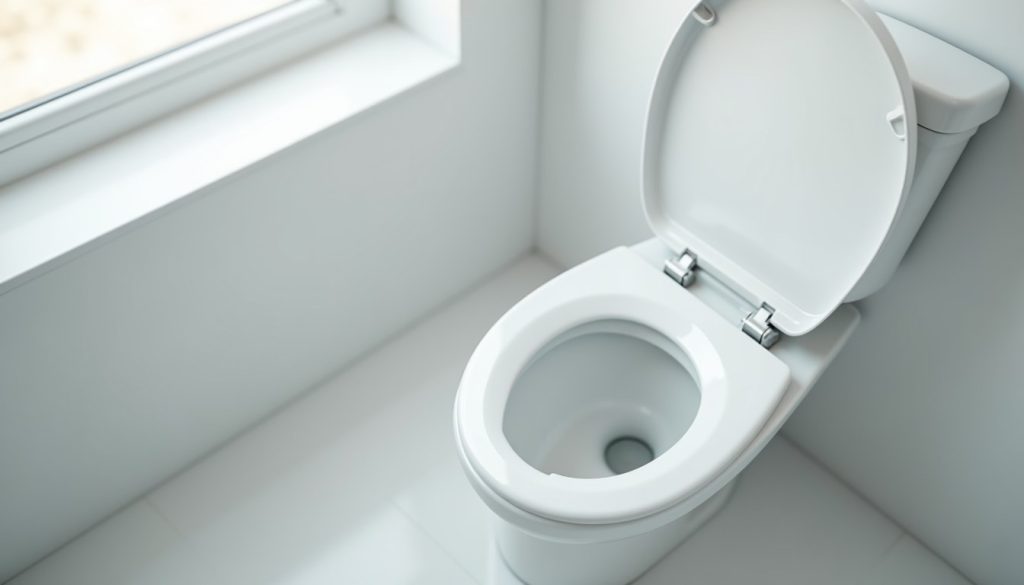
A toilet that keeps running is one of the most expensive quiet noises in a house. Water slips out of the tank into the bowl, the fill valve tops the tank back up, and the meter keeps turning — all day, every day, without a single visible leak. A tired rubber flapper can waste well over 200 litres in twenty-four hours, and nothing about the toilet looks broken while it happens. The good news is that the diagnosis takes about five minutes and the repair usually costs less than a coffee.
What the sound is telling you
The tank is a simple balance of two parts working against each other. Water sits above a rubber seal; when you press the handle, that seal lifts and the tank empties into the bowl. A float then drops, which opens a fill valve, and water refills the tank until the float rises back to its set level and shuts the valve off.
“Running” means that loop never fully closes. Either the seal is letting water past, so the level keeps dropping and the valve keeps opening, or the valve itself cannot shut off cleanly. Listen closely: a soft hiss that never stops points at the fill valve, while a faint trickle with long silences between refills points at the flapper. Both sound similar from the hallway, which is why the tank lid has to come off.
Identify the three parts before touching anything
Shine a torch into the tank and find these in order. The flapper is the rubber flap on the bottom, chained or clipped to the handle lever. The fill valve is the tall plastic column, usually on the left, with a small tube running from it into the overflow pipe. The float is either a ball on an arm or a cup that slides up and down the fill valve body. If your toilet has a tower-style valve instead of a separate ball, the float and valve are one unit and the flapper is the only serviceable rubber part.
Turn the water off at the isolation valve behind the base of the toilet, or at the mains if there isn’t one, and flush to empty the tank. That single step turns a wet job into a dry one.
The flapper is the usual suspect
Rubber hardens, warps and grows a film of mineral scale. Run a fingertip around the flapper’s sealing edge: it should feel supple and flat. If it feels stiff, has a visible ripple, or leaves a grey smear on your finger, replace it. Take the old flapper to the shop if you can — the shape and the mounting lugs differ between brands, and a wrong one will seal badly and cost you a second trip.
Before buying anything, run the dye test. Dry the bowl, drop a few drops of food colouring into the tank, and leave it for fifteen minutes without flushing. Colour in the bowl means water is escaping past the flapper. If the bowl stays clear, the flapper is fine and the fill valve is your problem.
When the fill valve keeps hissing
A valve that will not shut off has usually got grit or scale caught in its internal washer, or the float is set too high so water keeps spilling into the overflow tube. Lift the float by hand while the water runs: if the hissing stops, the valve works and the float adjustment is wrong. If it keeps hissing with the float held at the top, replace the whole valve. Modern replacement valves are a single unit, fit most tanks, and cost roughly the same as a takeaway meal.
Set the water level correctly
Once the leak is fixed, the tank level matters. Water should sit about two and a half centimetres below the top of the overflow tube. Higher than that and the tank drains into the bowl continuously — a running toilet you created yourself. Most valves have a screw or a sliding clip for this; adjust, flush twice, and watch where the water settles.
When it is not the tank at all
Two other faults mimic a running toilet. A refill tube clipped too far down the overflow pipe siphons water out of the tank — it should sit above the water line, not inside it. And a leaking inlet connection at the wall produces a constant drip sound with no tank involvement at all; a dry tissue wrapped around the nut will show damp within minutes.
Stop and call a plumber if the tank itself is cracked, if the floor around the base is soft or stained, or if the shut-off valve will not close. Those are structural or supply-line problems, not parts you can swap in an afternoon.
What this is worth doing today
Replacing a flapper is a ten-minute job and one of the few home repairs with an immediate, measurable return: the meter stops moving when nobody is using water. Do the dye test tonight, and if the bowl turns colour, buy the part tomorrow. If you are already chasing water waste around the house, the same logic applies to a dripping tap and to the way you use hot water — see our guide to fixing a dripping tap and the habits in saving water at home. For drains that gurgle or empty slowly, clearing a slow drain without harsh chemicals covers the safe method.
Official background on how much a silent leak wastes is worth a read at EPA WaterSense.