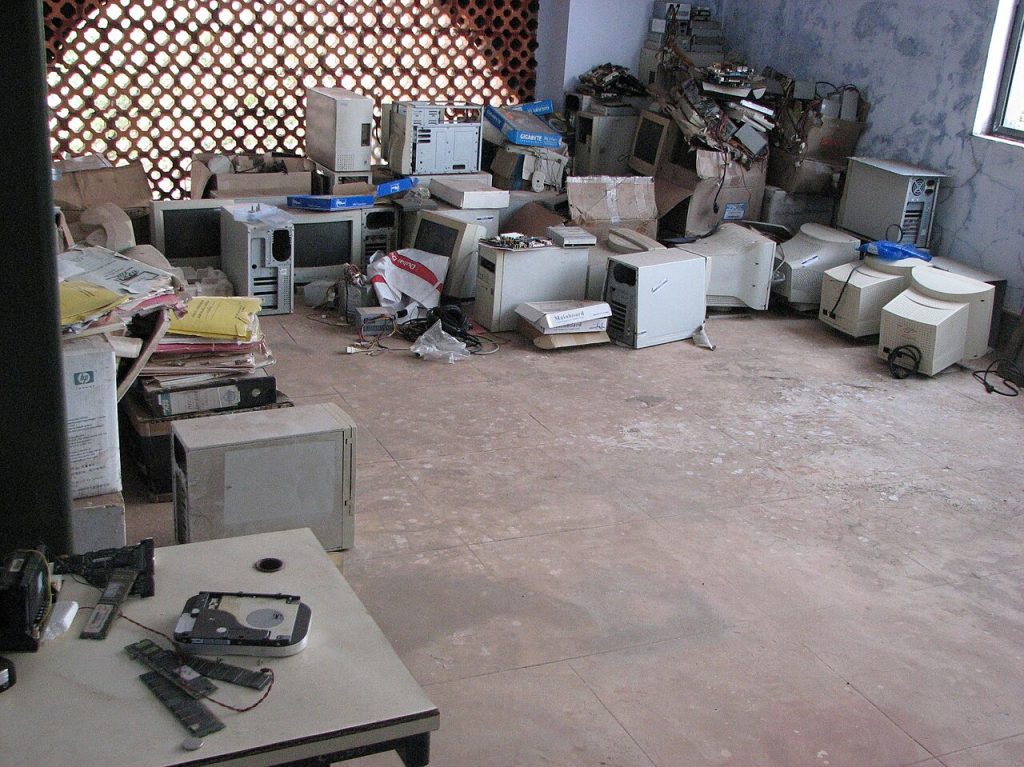
Every household has a drawer of dead phones, tangled chargers, a router that stopped working in 2019 and a jar of batteries of unknown age. It is tempting to bin the lot, but that is both wasteful and, in most places, illegal. To dispose of old electronics properly you need three habits: wipe the data, sort the batteries, and use a real collection point.
Why old electronics pile up in drawers
Two reasons. The first is guilt: a working phone feels too good to throw away, so it waits for a use that never comes. The second is uncertainty: nobody is sure whether a device counts as hazardous waste. In practice, anything with a battery, a circuit board or a screen is electronics, and all of it can be recycled.
Start by emptying one drawer onto a table and sorting into four piles: working devices, dead devices, cables and chargers, and loose batteries. That single sort answers most of the “what do I do with this” questions before you leave the house.
Dispose of old electronics at a proper collection point
Most cities now run e-waste drop-offs at recycling centres, and many electronics shops take small items back over the counter. Ask at the shop where you bought the replacement; take-back obligations are common and staff rarely mention them unless asked. Retail collection bins for phones, cables and small appliances are usually near the entrance.
Before you hand anything over, remove memory cards and SIM trays, and check the device is not something you would rather sell. A five-year-old phone still has resale value, and a working laptop can go to a school or a repair cafe that refurbishes machines for students.
Handle swollen or leaking batteries carefully
A battery that is bulging, hissing or leaking white powder is a fire risk and needs different handling. Do not puncture it, do not bend it back into shape, and do not leave it on a wooden shelf. Put it in a non-flammable container away from anything that can burn, and take it to a hazardous-waste or battery collection point the same week.
Loose alkaline cells are safer but still should not go in household rubbish. Tape the terminals with clear tape, keep them in a dry box, and drop them in a shop collection tube when the box is full.
Wipe your data before anything leaves the house
A factory reset is not the same as erasing data on an old phone. Do a proper reset from the settings menu while the device is still signed in to the account, which triggers the encryption-key destruction that makes recovery impractical. Remove the device from your account afterwards so the next owner is not locked out, and take out the SIM and memory card first.
Laptops need the drive wiped, or the drive removed and kept. If the machine will not boot, taking the drive out is often easier than fighting the operating system, and it also protects you from a buyer finding old tax returns.
Turn one dead device into money or parts
Before recycling, look at the pile again. Working chargers fit other devices. An old router can serve as a spare or an access point for a corner of the house. A broken laptop often has a reusable drive or a stick of memory that fits a family member’s machine. One useful repair can save more money than the scrap value of the whole box.
When you do dispose of old electronics, keep the receipt or a photo of the drop-off point. Some schemes send vouchers, and a record makes it easy to repeat next year instead of rebuilding the drawer from scratch.
The short version
If the drawer is already overflowing, do it in one pass: sort, wipe the data, tape the battery terminals and drive it to a collection point. Households that dispose of old electronics on a fixed date once a year never rebuild the pile, because nothing has time to become sentimental.
If you would rather not drive anywhere, ask the shop you buy from next whether they accept trade-ins; many will dispose of old electronics for you at the counter on the same visit.
Put the date in your calendar. Households that dispose of old electronics on a fixed weekend each year never rebuild the pile, and one recurring reminder is the difference between a habit and good intentions when it is time to dispose of old electronics again.
Related reads
For country-specific rules and drop-off guidance, the US EPA electronics recycling page is a solid reference: epa.gov.