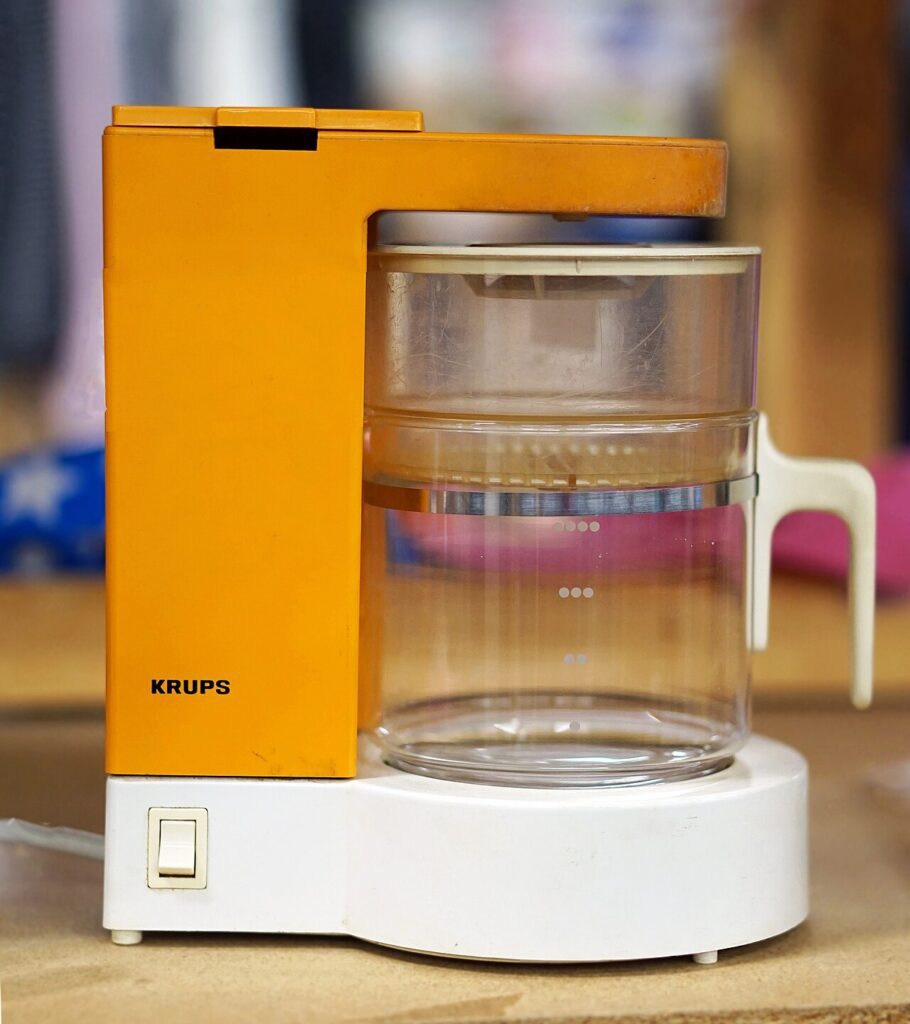
If your coffee tastes flat, the brew is lukewarm, or the machine finishes a pot in half the usual time, the problem is usually not the beans. It is limescale: calcium carbonate that precipitates out of tap water and bakes onto the heating element and the tubes. A 1 mm layer of scale on a heating element can add roughly 10% to the energy needed to heat the same water, and it blocks the flow path that gives coffee its contact time. Descaling is a 40-minute job with two ingredients you already own.
Check for scale before you clean
Look at the shower head on a drip machine, the perforated disc above the filter basket. White crusting on it, visible even as a pale ring, means scale is already building. Run a brew cycle with water only and time it: if it takes noticeably longer than it did when new, or the machine gurgles and steams instead of flowing steadily, the path is partly blocked. Many pod machines will tell you outright — a red or blinking descale light that will not clear with a rinse is the manufacturer counting litres through the flow meter.
Water hardness drives the interval. Below about 100 mg/L of calcium carbonate, descale every three months. Between 100 and 200 mg/L, every six to eight weeks. Hard water above 200 mg/L, or any household using well water, monthly. In Dhaka and most South Asian cities, tap water regularly tests well above 200 mg/L, so monthly is realistic rather than excessive. A 5 BDT strip test tells you where you stand, and a $10 kettle descaler test is the same chemistry.
The solution: ratio matters more than brand
White vinegar at 5% acidity works on almost every drip and pod machine. Mix one part vinegar to two parts water for a lightly scaled machine, or one to one for a heavy one. Do not use vinegar on machines with aluminium internal parts, and never on an espresso machine with a boiler — the acid attacks the metal and can void the warranty. Those need citric acid: 20 g of food-grade citric acid powder per litre of water, which is what most commercial descalers actually contain, plus a colouring agent.
Whatever you use, the machine’s own manual overrides this article. Some manufacturers require a specific proprietary cartridge or a service mode to purge correctly, and a couple of pod systems will refuse to brew afterwards unless the descale sequence is completed properly.
Run the cycle in the right order
Empty the reservoir, pour in the solution, and put an empty carafe or a large mug under the spout. Start a brew cycle with the machine’s basket empty — no coffee, no pod. Stop it halfway, the moment the reservoir is roughly two thirds drained, and let it sit for 20 minutes. That soak is what dissolves the scale; the flowing cycle alone mostly washes past it.
After the soak, run the rest through into the carafe and discard it. Then rinse: fill the reservoir with clean water and run a full cycle, and repeat that rinse at least twice, ideally three times. The third rinse is not superstition — residual acid leaves a sour note in every subsequent cup, and on pod machines it can leave the descale light stuck on. Wipe the shower head with a soft cloth and a toothbrush along the holes, and finish by running one cycle with fresh water and no coffee to confirm the flow is even.
Keeping scale away between cleanings
Filtered water is the single biggest lever. A jug filter with an ion-exchange cartridge drops hardness substantially and costs far less than the coffee it protects, though you must change the cartridge on schedule or it starts releasing what it captured. Empty the reservoir at the end of each day instead of leaving water to sit and evaporate into concentrate, and never leave a pod machine with water in it for weeks.
Pod machines need one extra habit: run a water-only cycle after every dozen pods to keep the needle and the brew chamber clear. Drip machines benefit from a monthly half-strength vinegar cycle once hardness is under control, which keeps the deep clean from ever being urgent.
If your kitchen energy costs are the bigger concern, the same scale logic applies to the kettle and the water heater — see our guides on cutting electricity bills with smart plugs and timers and lowering your water heater temperature safely, both of which cover the heating-cost side of hard water. For the manufacturer’s own sequence on a specific model, check the machine’s manual or the support page for your model line at Brother support or your brand’s equivalent.