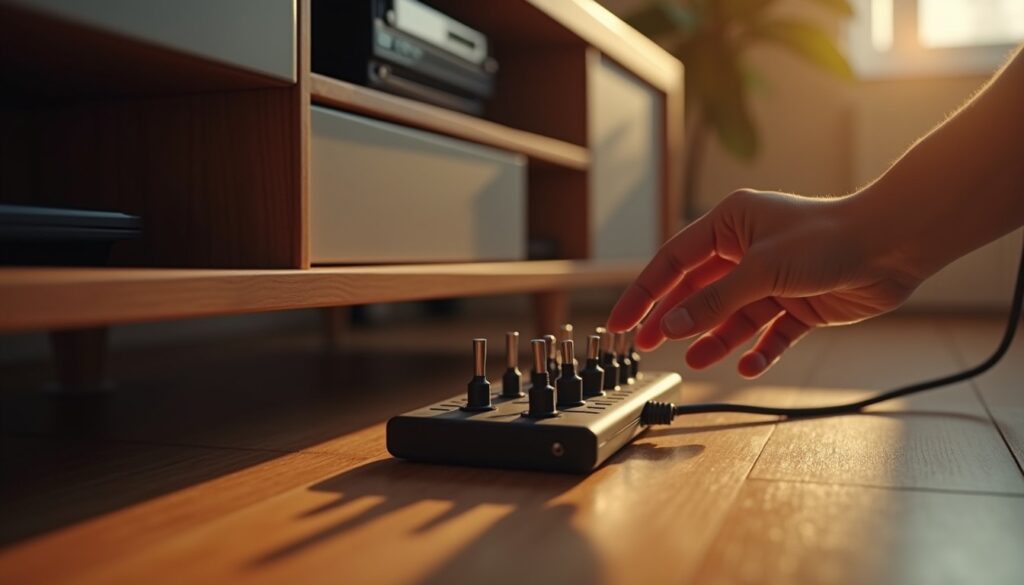
Something in your home is drawing power at this moment that you are not using, and the total is usually bigger than the phone chargers people blame. A plug-in energy meter costs about 1,200 BDT and settles the argument socket by socket. The point of measuring is not thrift for its own sake: it is to find the two or three devices worth automating and to leave the rest of the house alone, because unplugging a dozen small adapters saves less than switching off one set-top box.
Take a reading before you change anything
Any inline meter works — a Kill A Watt EZ, a BN-LINK unit, or a smart plug that reports watts in its app. Plug the strip or the device into the meter, put the device into standby with its own remote, and let the number settle for ten minutes. A stable figure means a genuine continuous load; a figure that swings or drops to zero belongs to something with a compressor or heater, and those are the wrong targets for this exercise.
Treat cheap meters as approximate below about 30 W. Many of them estimate apparent power, and switch-mode power supplies with poor power factor read high. That is fine for ranking devices against each other, which is all you need.
Convert the reading once and you will remember it: a single watt held all year is 8.8 kWh. Eighteen watts is roughly 158 kWh, which is about 1,260 BDT at a tariff of 8 BDT per unit, or USD 25 at 16 cents. Two watts is 17.5 kWh — real, but not worth a routine.
Where the wasted watts actually sit
The pattern is consistent across most homes, and it is rarely the chargers:
- Cable and satellite boxes. The worst offenders by a wide margin. Lawrence Berkeley National Laboratory’s standby research found set-top boxes drawing close to their full operating power while “off”, because the tuner and programme guide stay live. 15–25 W is normal.
- Consoles left in instant-on. An Xbox in Instant-on mode holds around 9–13 W for background updates and remote wake; switching to Energy Saver drops it under 1 W. A PS5 in rest mode with USB charging enabled behaves the same way.
- Laser printers. A printer that never sleeps keeps its fuser warm at 4–8 W. Most menus offer a deep sleep at 1–2 W; set sleep to 5 minutes instead of an hour.
- TV quick start. “Quick Start”, “Instant On” or “Fast Boot” keeps the network stack and tuner alive so the picture appears in two seconds. That convenience costs 5–12 W continuously.
- Soundbars, AV receivers and microwave clocks. Two to six watts each, and on most microwaves there is no setting that turns the clock off at all.
What must stay plugged in
Do not put the fridge, the freezer, the router or optical network unit, a medical device, a heat-pump controller or a hard-wired alarm on any timer. A fridge cycling off for hours loses more in spoiled food than it saves in a year, and cutting a router’s power nightly is how people end up with a device that needs a manual reset every morning. If you run a solar inverter or a battery system, those stay live too.
The honest test for everything else is simple: if switching it off for a week would not change how you use the house, it is a candidate. A spare-room TV, a games console you play twice a month, a printer, a projector — all fine to cut at the wall.
One switch per cluster beats twenty unplugs
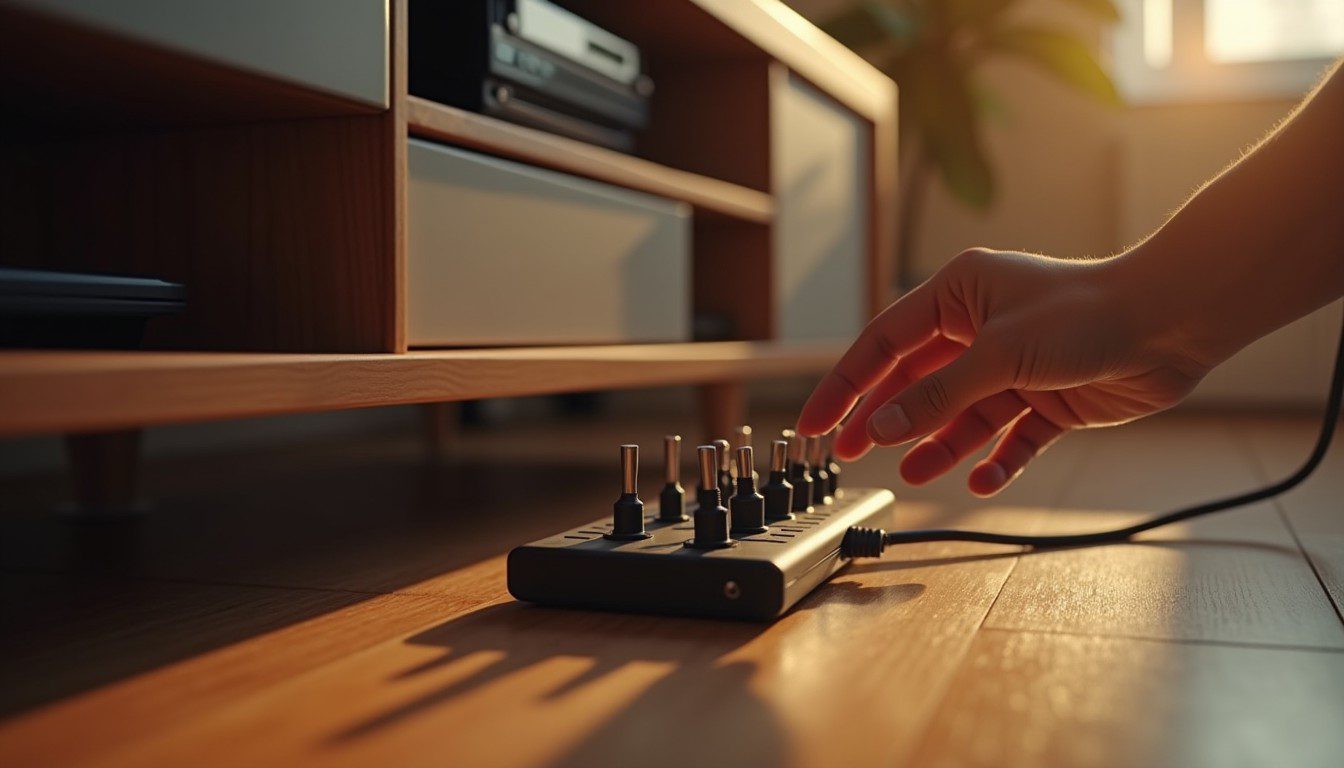
A master-slave strip is the cheapest automation that actually works. The television goes in the master socket; when it drops below a threshold of roughly 10–12 W, the strip kills the slave sockets holding the console, soundbar and disc player. One button, no app, nothing to configure, and about 1,500–2,500 BDT. Buy one with a clearly marked always-on socket and put the router there.
Smart plugs are the alternative and they have a hidden cost: the plug itself draws 0.5–2 W to stay connected. Against a 20 W set-top box that is minor. Against a 3 W soundbar you are spending a fifth of the saving to switch it. Our guide to cutting the bill with smart plugs and timers covers the scheduling side, and if water heating is your biggest load, lowering the water heater thermostat is worth more than every standby fix combined.
Turn the savings into a number you can check
Add up what you measured. A typical living room — box at 18 W, console at 10 W, printer at 4 W, soundbar at 3 W, microwave clock at 2 W — comes to about 37 W, which is 324 kWh a year and roughly 2,600 BDT. Address the box and the console and you remove three quarters of it. A 2,000 BDT master-slave strip that kills that much load pays for itself in roughly a year, and the result is checkable: read the meter again after a month of the new routine and compare the units on your bill.
The Berkeley Lab standby project keeps a list of devices worth unplugging if you want a second opinion on a specific appliance.