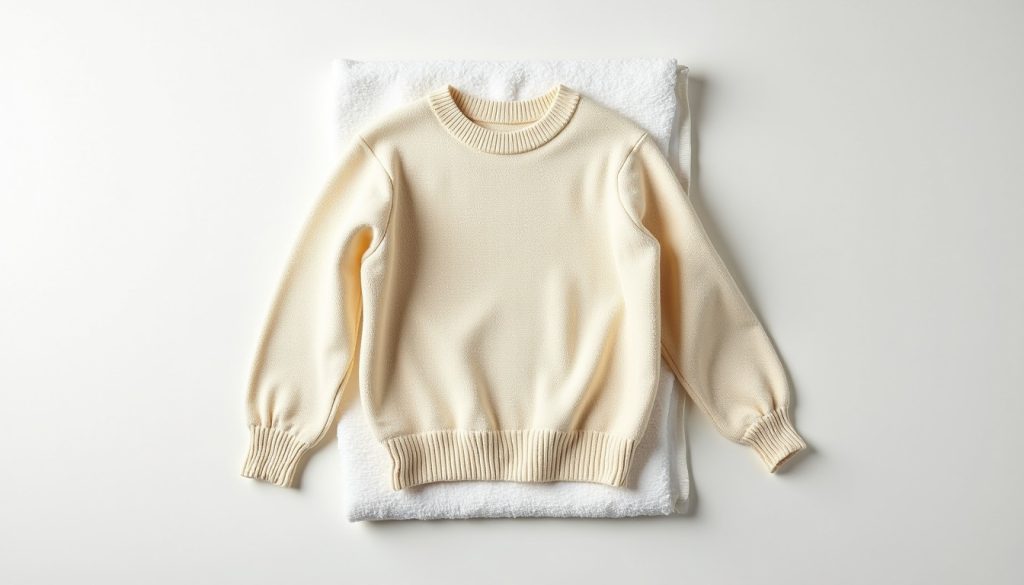
Wool sweater care becomes less mysterious once you stop treating every knitted garment as the same item. A machine-washable merino layer, a loosely knitted jumper and a dry-clean-only piece can need different handling. The care label belongs to the actual sweater in your hands, so it outranks a general internet shortcut. The goal is a clean garment that keeps its fit, not a dramatic before-and-after experiment.
Let the label decide your wool sweater care method
Read both the washing and drying instructions. A wool label does not automatically mean hand-wash-only, and a familiar-looking machine cycle does not automatically make a dry-clean-only garment washable. If the label is missing and the sweater is valuable or complicated, ask a professional cleaner rather than guessing from softness or price.
Check for leather trim, structured details, embellishments and contrasting colours. These may need more care than the main fibre suggests. Empty pockets and inspect seams before washing. A loose seam or small hole is easier to notice on a dry sweater than in a basin full of wet fabric.
The Woolmark sweater-washing guide distinguishes machine-washable garments from those suitable for hand washing. Use it alongside your label, not instead of it. There is no reason to buy a special treatment until you know which process the garment actually permits.
Set up the basin before the sweater gets wet
For a garment that allows hand washing, prepare a clean basin with lukewarm water and a wool-suitable detergent, following the detergent’s dose. Dissolve the product before adding the sweater so you are not pouring concentrated detergent directly onto one patch. Avoid turning a small wash into a foam bath; excess product creates extra rinsing work.
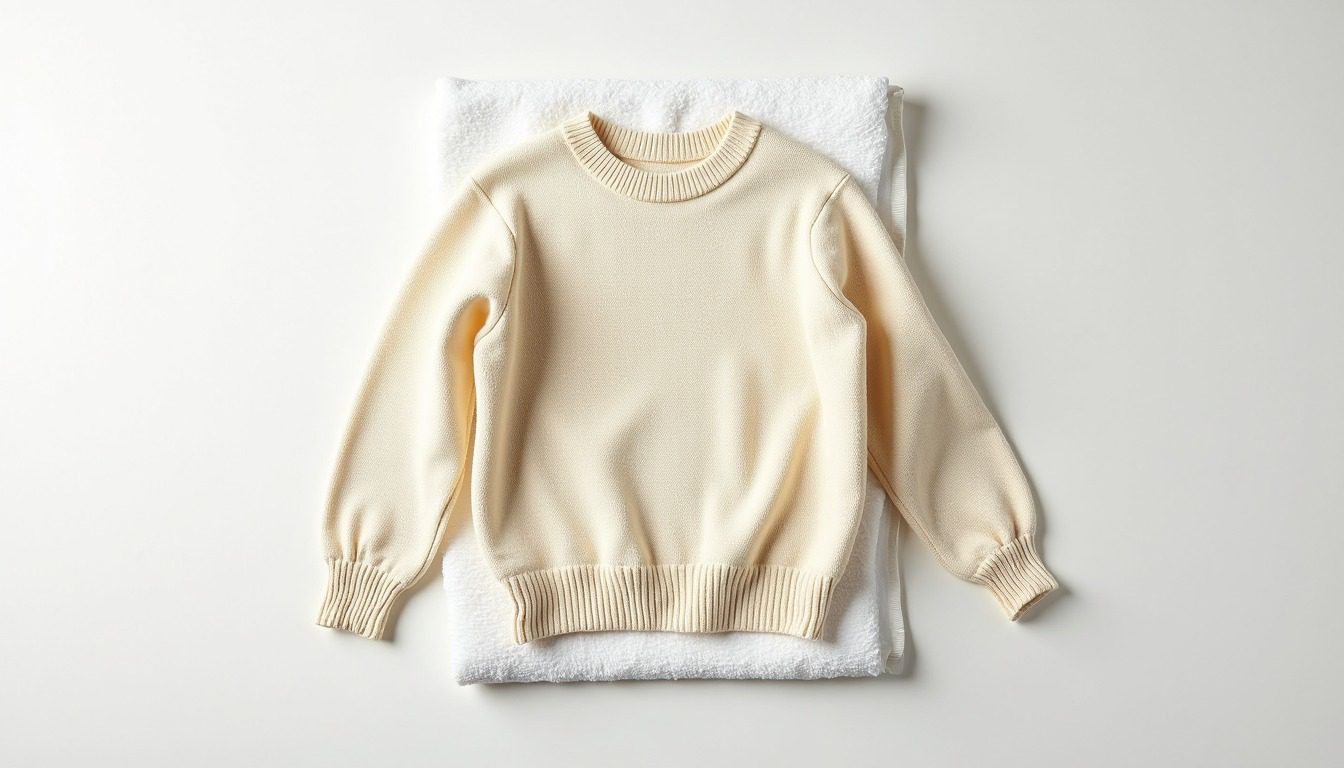
Have the drying surface ready too. Put a clean towel where the sweater can lie fully supported, rather than discovering halfway through that your only rack has narrow bars and no flat area. In a compact home, a prepared washable surface and a spare dry towel are more useful than a pile of products.
Woolmark’s hand-washing sequence uses a ten-minute soak followed by thorough rinsing. Handle the garment gently rather than scrubbing it against itself. Keep the care label in view and follow any stricter instructions it gives. A visible stain that does not respond to appropriate care deserves targeted advice, not stronger improvised chemicals.
Lift and dry without stretching the knit
Support the wet sweater with both hands as you remove it. Let water drain while the fabric remains gathered, rather than lifting the whole weight by the shoulders. Do not twist it into a rope. Spread it on a clean towel, arrange the sleeves naturally and gently press out moisture. A fresh towel helps when the first one becomes saturated.
Lay the sweater flat for drying when its label calls for that method. Smooth it toward its original shape without tugging the cuffs or stretching the body for extra length. Keep it away from direct heat. Hanging a heavy wet knit from a narrow hanger is not a shortcut to preserving the shape you just worked to protect.
Turn the garment or change the towel as necessary so the underside is not left against damp cloth. In humid weather, choose an airy indoor location rather than a closed cupboard or a bathroom that stays steamy. Before storage, check the thicker areas around cuffs and seams as well as the easy-to-feel centre of the body.
Choose the machine only when the garment permits it
If the label allows machine washing, follow its temperature and cycle limits. Woolmark recommends a wool cycle and a suitable wool detergent; it also describes turning the item inside out or using a laundry bag. Do not assume that mixing the sweater into an ordinary heavy load preserves those conditions. Hooks, zips and rough fabrics make poor companions for delicate knitwear.
General advice about cold-water washing is useful for suitable laundry, but the label still decides what is appropriate for this piece. Likewise, washing-machine filter maintenance helps look after the appliance; it does not turn every cycle into a wool-safe programme.
After the sweater dries, fold it rather than stuffing it into a crowded space while it is still damp. Record the successful care settings somewhere you can find next season. If a piece has already shrunk or felted, avoid promises that a household soak will reliably restore it. Preventing a repeat is a more realistic plan than relying on an unverified rescue trick.