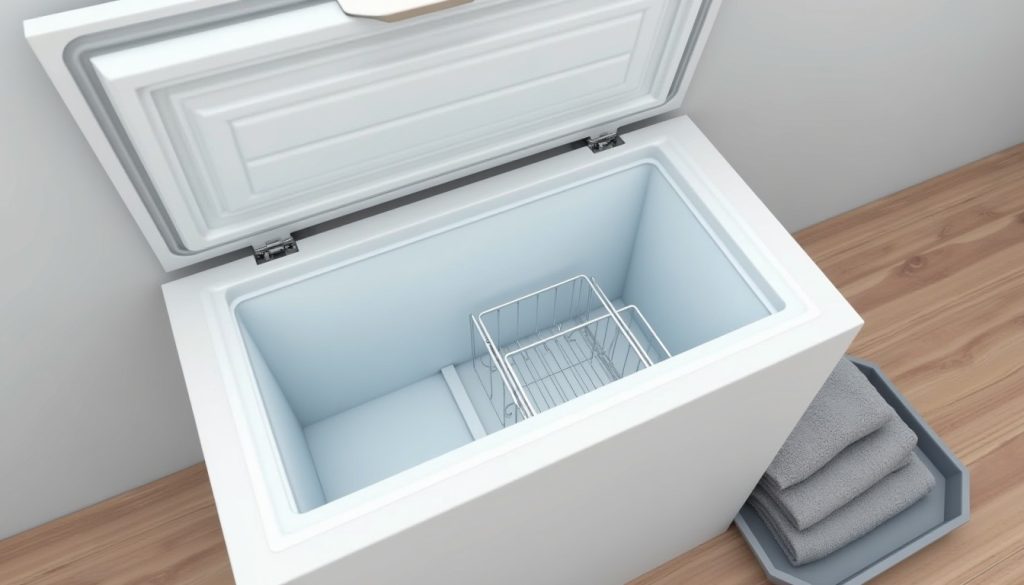
Defrost a freezer on purpose, not when you have just returned with a week’s frozen shopping. Manual defrosting needs a place for the food, a way to collect meltwater and enough time for the cabinet to cool again. Scraping at the ice because dinner is approaching turns a manageable household task into a risk to the appliance and its contents.
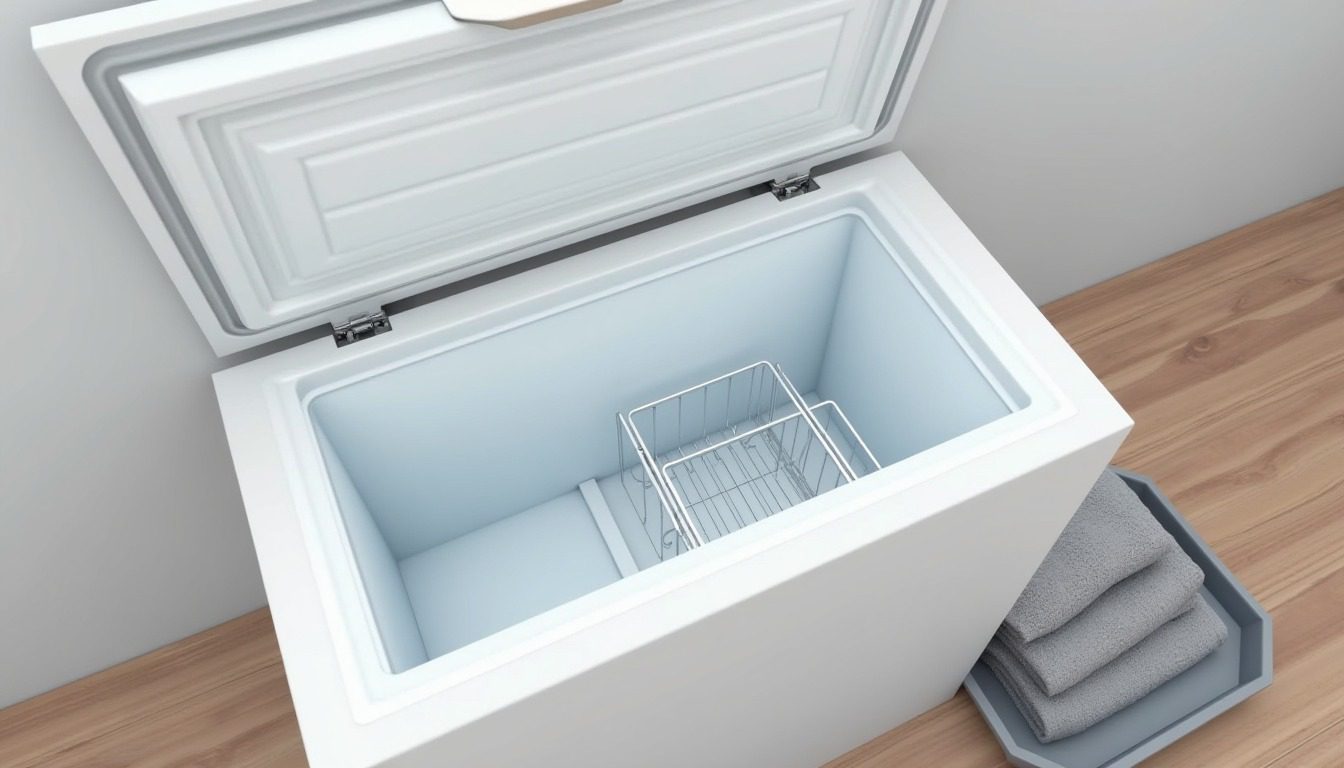
Check whether you should defrost a freezer manually
Find the model number and read the appliance manual first. Some freezers defrost automatically; a growing slab of ice in a frost-free model may signal a door-seal, airflow or defrost-system problem. Do not assume that every freezer needs the same routine or that removing the ice fixes the reason it appeared.
For a manual-defrost model, choose a day when stock is low. List the contents before unloading them, especially items buried at the back. Our guide to preventing freezer burn covers packaging and organisation after the appliance is back in use. Defrosting removes accumulated ice; it cannot reverse damaged food quality.
Arrange reliable cold storage before switching anything off. Another functioning freezer is simpler than hoping an ordinary shopping bag will remain cold for several hours. If that is unavailable, use suitable insulated storage with a dependable cold source and temperature monitoring, or postpone the job until the stock can be reduced safely.
Keep food decisions separate from the cleaning job
Move the food directly to the prepared storage and keep that storage closed. Do not line frozen meat along the kitchen counter while you wash drawers. A warm room, especially during humid weather, is not a holding area. Record when the food left the operating freezer and check the actual storage conditions rather than guessing from how cold a packet feels.
If anything thaws or its temperature history becomes uncertain, use the food-specific FoodSafety.gov temperature and discard chart. The chart distinguishes different foods; ice cream, for example, does not follow every rule that applies to other frozen items. Never taste food to decide whether it is safe.
Do not use the familiar claims about how long a closed freezer stays cold during an outage to justify food sitting in an open cabinet during defrosting. Those are different conditions. If you cannot maintain safe storage for the contents, the sensible decision is to change the plan, not rush the ice removal.
Let the ice melt without sharp tools or electric heat
Follow your manual’s shutdown and unplugging instructions. Keep your hands dry when handling the plug and protect nearby electrical connections from meltwater. Remove drawers when they release easily; do not wrench a frozen drawer free. Prepare absorbent towels and a shallow collection tray, using any drainage arrangement specifically described for your model.
Leave the door open and allow natural melting. Beko’s manufacturer defrosting guide stresses that the process can take hours and should not be forced. A knife or screwdriver can damage the lining or hidden components. A hairdryer adds an electrical appliance to a wet working area; it is not a sensible substitute for patience.
Check the floor and collection tray periodically. Replace soaked towels before water spreads under cupboards or toward sockets. If the appliance has an unfamiliar drain fitting, consult the diagram in its manual rather than removing a plug just because it looks removable. Do not tilt or dismantle the freezer to speed up drainage.
Dry, restart and confirm the temperature before reloading
Once the ice has melted, clean the accessible interior and removable parts only as the manual permits. Avoid abrasive tools, strong improvised chemical mixtures and pouring water into vents. Dry the cabinet, drawers and seals thoroughly before reassembly. Check that the drain closure, if your model has one, has returned to its proper position.
Restart according to the manufacturer’s instructions and wait until the freezer has reached its specified storage temperature before returning food. An appliance thermometer gives more useful evidence than the sound of a running compressor. Our guide to refrigerator and freezer temperature settings explains why checking matters.
Reload in an arrangement that lets drawers close and keeps vents clear. Note the defrost date and whether you found a damaged seal or a door that was not shutting properly. If heavy ice returns unusually quickly, investigate that cause or arrange service. Repeating the same melt-and-refill routine is not a repair for a continuing fault.