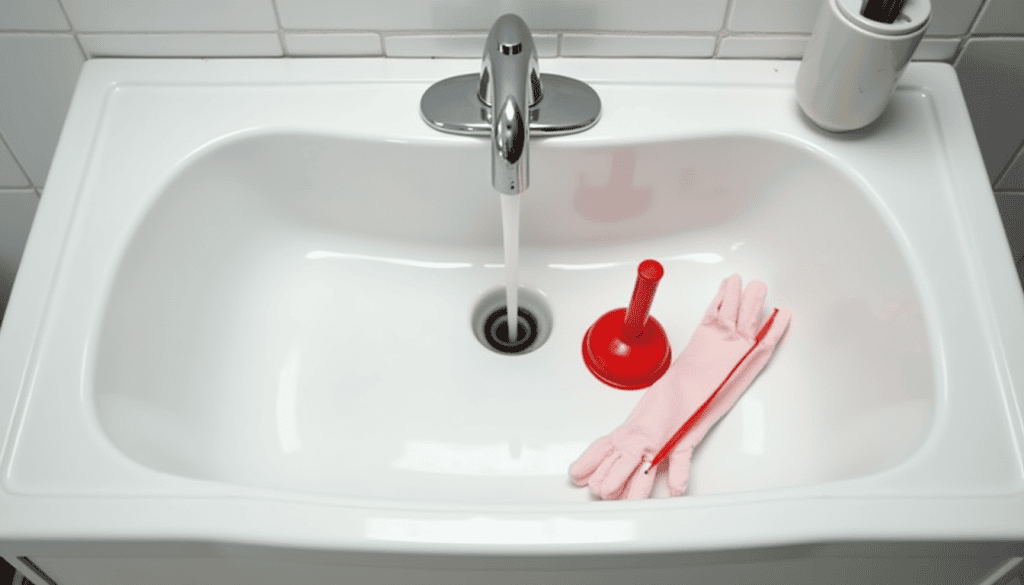
If water sits in your basin for a minute after you brush your teeth, or the kitchen sink holds a greasy puddle after you wash the kadai, you can usually unclog a slow drain yourself with a plunger, a bucket and a few household items. You don’t need caustic chemicals.
What Is Blocking the Sink, and Is It Only One Sink?
The cause depends on which sink is slow. In the kitchen, the culprit is almost always fat. Frying oil, ghee and curry residue cool inside the pipe and coat it. Rice starch, dal, tea leaves and small food scraps then stick to that coating until it turns into a grey paste. In the bathroom, the usual problem is hair wound together with soap scum and toothpaste. The clump often sits just under the stopper.
Before you touch any tools, check your other drains. If the kitchen sink, basin, shower and floor drains are all slow, the blockage is not in the sink. The same is true if water gurgles up in the shower when someone flushes the toilet. In both cases the problem is in the main line or soil pipe. Plunging one sink won’t fix it, and it can push dirty water out of the lowest drain in the house. Stop and call a plumber. In a flat, also tell the building caretaker, because a shared stack may be blocked. If only one sink is slow, the problem is almost certainly within the first metre or so of its pipe, and you can usually reach it.
Pulling Out Hair and Debris at the Drain Opening
Start at the top. Take out the strainer or stopper. Many simply lift out and some twist out. A pop-up stopper in a basin may be held by a horizontal rod behind the pipe under the sink. Loosen the small nut on that rod and the stopper will come free. Clean the stopper itself, because a surprising amount of hair collects on it.
Next, feed a plastic drain snake into the opening. This is a thin barbed strip sold cheaply in hardware shops and online. You can also straighten a wire hanger and bend a small hook at the tip. Push it in, twist it, and pull it out slowly. Wear rubber gloves, because what comes up is unpleasant. Don’t force a metal hook hard against an enamel or ceramic basin, since it scratches. In bathroom basins, this step alone often solves the problem.
How to Unclog a Slow Drain With a Cup Plunger
Use a cup plunger, the kind with a flat rubber rim. The toilet plunger with an extra flange underneath is not designed for a flat sink. A plunger only works if the pressure has nowhere else to go, so seal any other openings first:
- Stuff a wet cloth firmly into the overflow hole near the rim of the basin.
- For a double kitchen sink, plug the second drain with its stopper or a wet cloth, and have someone hold it down.
- Run enough water to cover the plunger cup by a couple of centimetres. A thin smear of petroleum jelly on the rim helps it seal.
Seat the plunger over the drain and give 15 to 20 steady push-and-pull strokes without breaking the seal. Then lift it off sharply. Repeat this three or four times. If the water starts draining faster, run hot tap water for a minute to carry the loosened material away.
Opening the P-Trap Under the Sink
If plunging fails, the clog is probably sitting in the trap, the curved section of pipe under the sink. Put a bucket underneath and lay a towel down. Plastic traps have large slip nuts that usually turn by hand. Metal traps may need a wrench, with a cloth wrapped around the nut so it doesn’t get scratched. As you take the trap apart, note which way each rubber washer faces.
Empty the trap into the bucket and scrub it with an old toothbrush. Then push the snake into the short pipe that runs to the wall. Reassemble the trap hand-tight plus a slight extra turn. Run water and check for drips.
Many kitchens in South Asia use a flexible corrugated hose instead of a rigid trap. Its ridges catch grease badly. You can usually pull it out of the floor or wall opening, rinse it outside, and refit it. If the hose has gone brittle, a new one costs very little. Some bathroom basins have a bottle trap instead, where the bottom cup unscrews for cleaning.
Hot Water, Baking Soda and Vinegar: Their Real Limits
Pour boiling water only into metal pipes, such as galvanised iron or copper, and only into a basin with no cracks. Most newer homes have PVC pipes. Boiling water can soften PVC and loosen its joints, and the sudden heat can widen a hairline crack in a ceramic basin. For plastic plumbing, use the hottest tap water you have, or kettle water left to cool for a few minutes.
The baking soda routine works like this:
- Bail out any standing water.
- Pour in half a cup of baking soda, then one cup of white vinegar, the same kind you would use to descale a coffee maker.
- Cover the drain and wait 15 to 30 minutes.
- Flush with one to two litres of hot water, keeping the temperature safe for your pipe type.
Be realistic about what this does. Most of the fizzing is the two ingredients reacting with each other. The mixture loosens light film and reduces smells, which makes it useful for maintenance. It will not dissolve a solid hairball or a lump of set fat. Those need the snake, the plunger or the trap.
Commercial chemical drain cleaners are usually strong alkalis such as lye, or strong acids. Never mix them with vinegar, bleach or any other cleaner, because the reaction can release heat and fumes. Never plunge or open the trap after pouring one in. The water can splash back onto your skin or into your eyes. If you have already used a caustic cleaner and the sink is still full, leave it and tell the plumber exactly what product went in. Whenever you are working near a drain that may contain chemicals, wear gloves and glasses and open a window.
Keeping the Drain Clear and Knowing When to Call a Plumber
A few habits prevent most clogs:
- Fit a mesh strainer in the kitchen sink and a hair catcher in the basin.
- Wipe greasy pans with a scrap of newspaper or kitchen paper before washing, and put the paper in the bin.
- Collect used cooking oil in a jar rather than pouring it down the sink.
- Do a hot-water flush or the baking soda routine once a month.
These fit easily alongside other small home habits that stop the daily mess. If your washing machine empties into the same pipe, lint can add to the problem, so keep up with cleaning the washing machine filter.
Call a plumber in any of these situations:
- Several fixtures are slow at once.
- Sewage smells or water backs up into other drains.
- The trap is clean but the sink still drains slowly, which means the blockage is further inside the wall.
- Old metal pipes look corroded or leak once disturbed.
- Caustic cleaner is sitting in standing water.