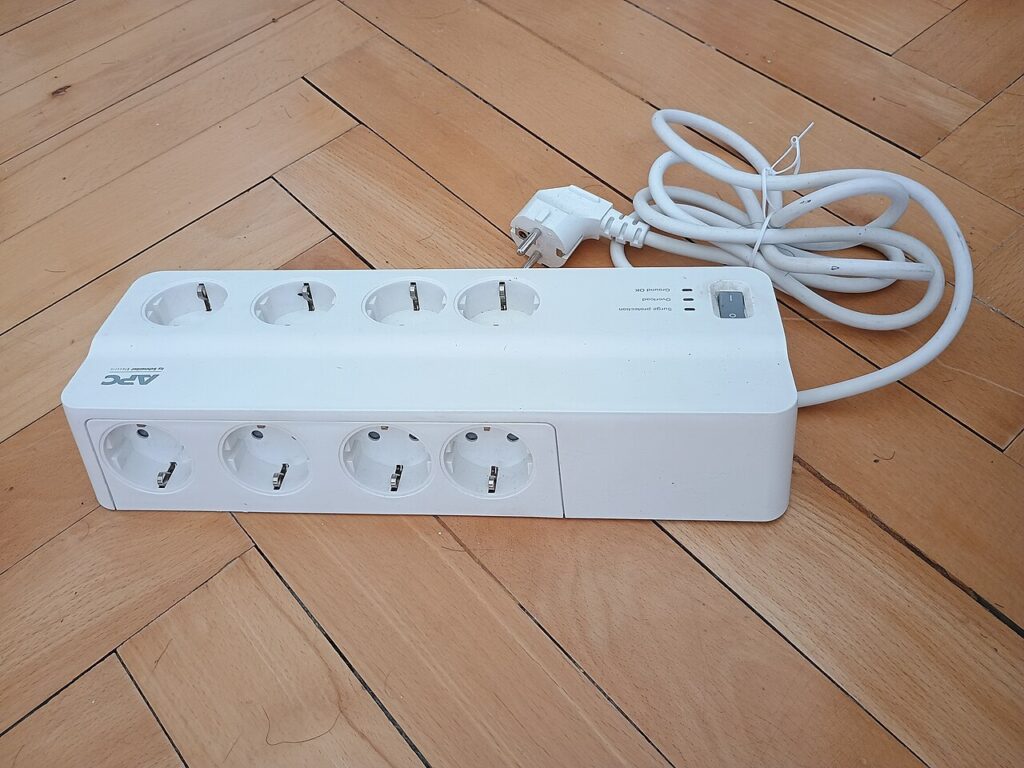
Power strip safety matters because small overloads can become heat, melted plugs, or fire hazards. The safest setup is not complicated: match the strip to the job and avoid using it like permanent wiring.
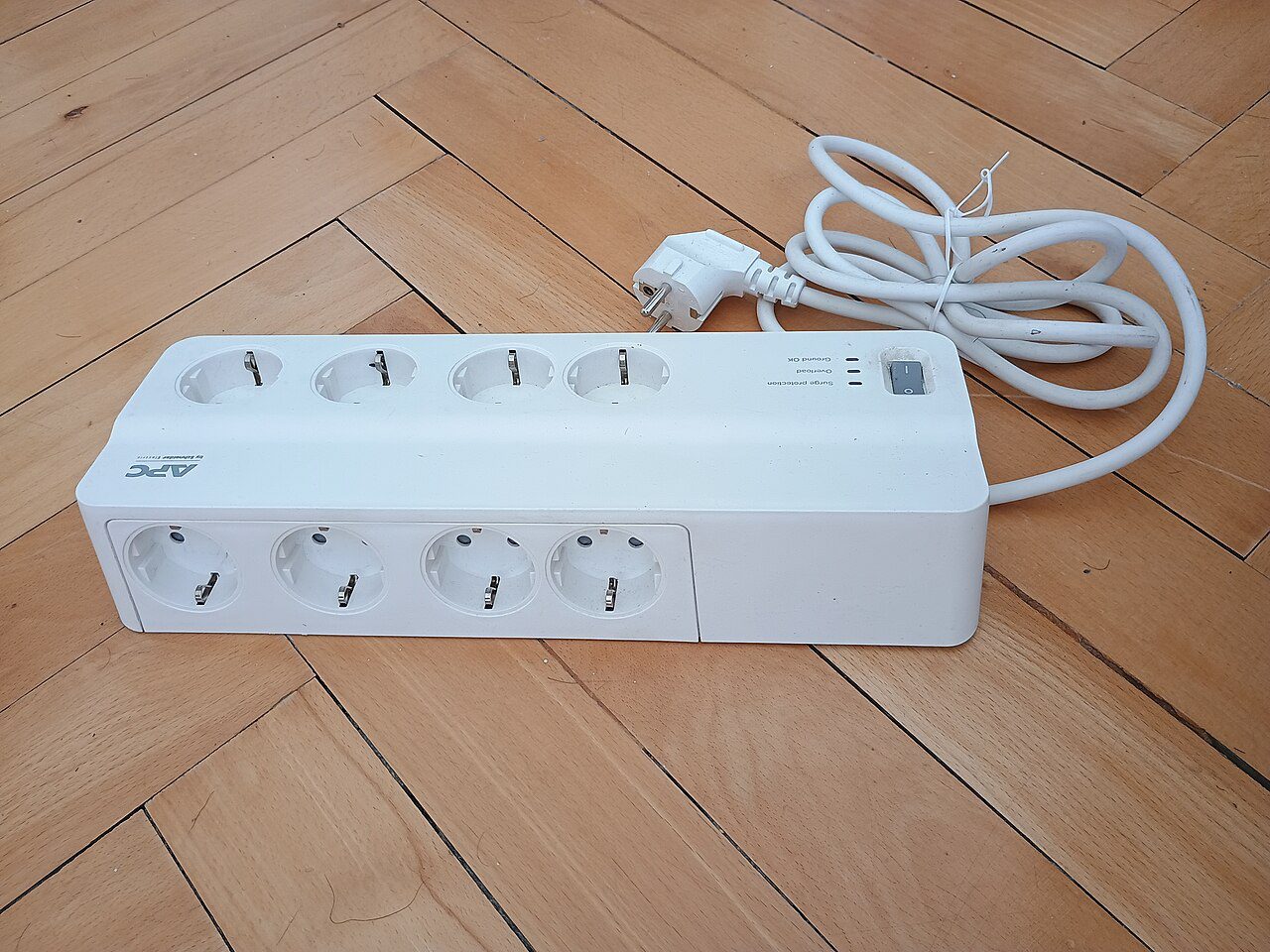
Keep power strip safety away from heaters
Never plug space heaters, kettles, microwaves, or other high-wattage appliances into a basic strip. Use a wall outlet that matches the device requirements.
Do not daisy-chain strips
Plugging one strip into another increases heat and hides overloads. If you need more outlets in a room, the safer fix is a proper wall outlet or a different layout.
Check the cord and plug often
Replace strips with cracked plastic, loose sockets, scorch marks, buzzing, or warm plugs. These are warning signs, not cosmetic issues.
Use surge protection where it helps
A surge protector is useful for computers, routers, and TVs, but it is not a license to overload. Look for a joule rating and a grounded plug.
Keep cables visible and ventilated
Do not run strips under rugs or tightly behind furniture. Heat needs a way out, and visible cables are easier to inspect.
Quick checklist
- Start with the lowest-risk change first.
- Write down what you changed so it is easy to reverse.
- Review the habit again next month so the fix sticks.
Treat a strip as a convenience for low-power electronics, not an extension of the wall. That mindset makes power strip safety easier in every room.
For more simple guides, visit the Tips & Tricks homepage.