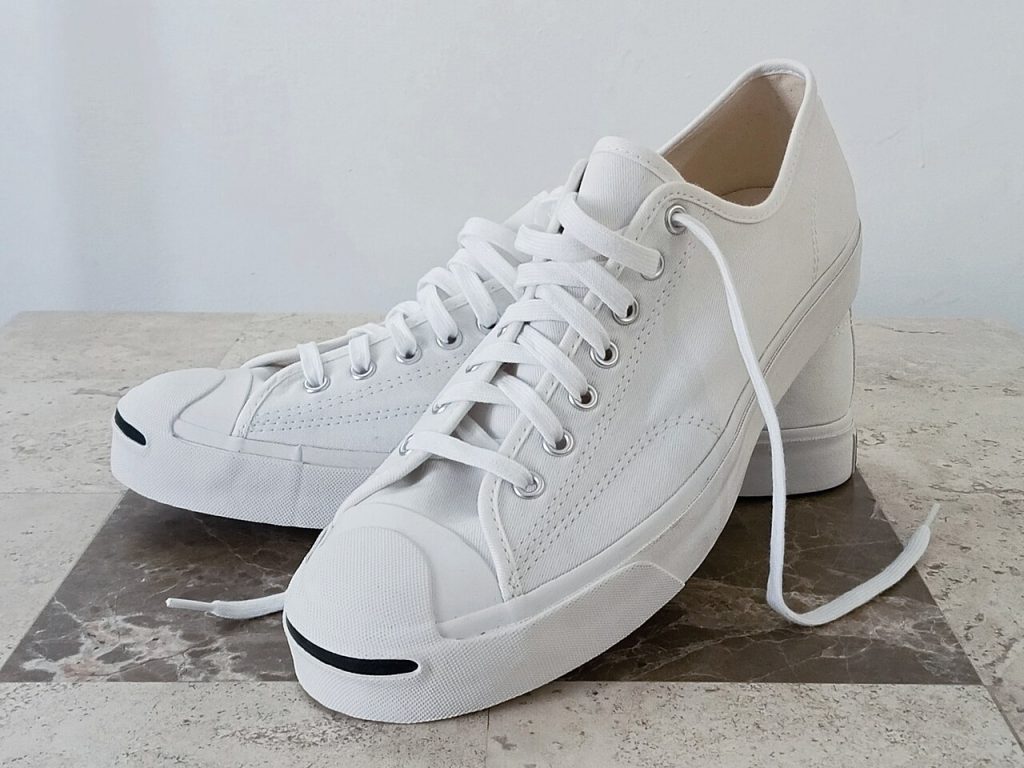
White running shoes go grey in about a month here. Dust from the road does it in the dry season, and monsoon mud does it in a single walk home. Throw them in the machine on a Friday and a BDT 6,000 pair can come back with a sole flapping off. You can wash sneakers without ruining them, but it takes twenty minutes of hand work and a lot of patience while they dry.
Read the label and identify the upper first
Look inside the tongue. Most brands print a small care label there, and many say “do not machine wash” or show a hand-wash symbol in a basin. Believe it. The manufacturer knows which adhesive holds the sole on, and you don’t.
Next, work out what the upper is made of. Engineered mesh and knit uppers, as on most running shoes, tolerate water and a soft brush. Canvas, as on classic plimsolls, is the toughest and takes the most scrubbing. Smooth leather needs a damp cloth and leather cleaner, not a wash. Suede and nubuck should not be wet at all. If you are unsure what you are holding, this overview of sneaker construction and materials shows how most shoes mix two or three.
Mesh shoes with suede overlays get the suede treatment near those panels.
Why the washing machine wrecks midsoles and glue
The midsole on most modern trainers is EVA or a similar foam, bonded to the rubber outsole and the upper with heat-activated glue. You cannot wash sneakers without ruining them in a drum, because a machine cycle attacks all three at once. Warm water softens the adhesive, the drum slams the shoe against the walls, and the spin cycle squeezes water deep into the foam. The usual result: a sole edge lifting at the toe a week later, or a heel counter that has lost its shape.
Machines suffer too. Grit, sand and dried mud come off the outsole and collect in the pump trap. If you have already washed a muddy pair this way, spend ten minutes cleaning the washing machine filter before your next load of clothes.
How to wash sneakers without ruining them by hand
Take the laces and insoles out. Knock off loose dirt outside, and let any mud dry fully and brush it off before water touches it. Wet mud just smears into mesh.
Fill a basin with about two litres of water at 30 to 40 C, warm to the hand but not hot. Add roughly a teaspoon of mild liquid detergent or a few drops of dishwashing liquid. No bleach, which yellows white mesh and weakens the glue. No fabric softener either, as it leaves a film that attracts dust.
Use two brushes. A stiff one, such as a cheap scrubbing brush, goes on the outsole and the treads. A soft one, an old toothbrush or a shoe brush, goes on the upper in small circles. Dip the brush, not the shoe.
Soaking is the mistake most people make. Water left overnight travels into the midsole and under the insole board, stays there for days and loosens the bond from inside. Wet only the part you are scrubbing, and rinse with a damp cloth, not under a running tap.
Laces can soak in the soapy water while you work; insoles get a gentle wipe and dry separately.
Drying, whitening soles and getting rid of the smell
Stuff each shoe tightly with crumpled newspaper or a rolled hand towel. This holds the shape and pulls moisture out of the lining. Change the paper after two or three hours, then again before bed.
Dry them in shade with moving air, under a ceiling fan or on a covered balcony. Never on a radiator, never in direct sun, never in a tumble dryer. Heat yellows white rubber and is exactly what weakens the adhesive. In Dhaka during the monsoon, expect a mesh shoe to need a full 36 to 48 hours. If the lining still feels cool to the touch, it is still wet. Wearing a damp pair is how mould starts.
For grey rubber sidewalls, mix three spoons of baking soda with one spoon of water into a thick paste. Scrub it onto the rubber with an old toothbrush, leave it for ten minutes, and wipe it off with a damp cloth. It lifts surface grime well, though it will not reverse deep yellowing in old rubber.
Once the shoes are fully dry, sprinkle a spoon of bicarbonate of soda into each one and leave it overnight. Tip it out in the morning. A quick brush of the soles after each muddy day, much like the simple care habits that prevent repairs on your other gear, means you will need the full wash far less often.
Suede, and knowing when a pair is finished
Suede is the exception: the only way to wash sneakers without ruining them here is not to wash them at all. Let any mud dry, then use a suede brush with brass or rubber bristles to lift the nap. A suede eraser, or a clean pencil eraser at a pinch, takes out scuffs. Water leaves tide marks and stiffens the leather.
Some shoes are past saving. A sole that has separated more than a centimetre along the edge, a midsole with visible cracks across the flex line, or black spots and a musty smell in the lining that come back after drying all mean the shoe is done. Glue repairs on running shoes rarely last, and mould in the lining is hard to remove completely.
If your rack is full of pairs that fail these checks, the approach in decluttering a home without the overwhelm works for shoes too. For the pair you are keeping, check the tongue label tonight, and if it says hand wash, put two litres of warm water in a basin this weekend and start with the stiff brush on the soles.