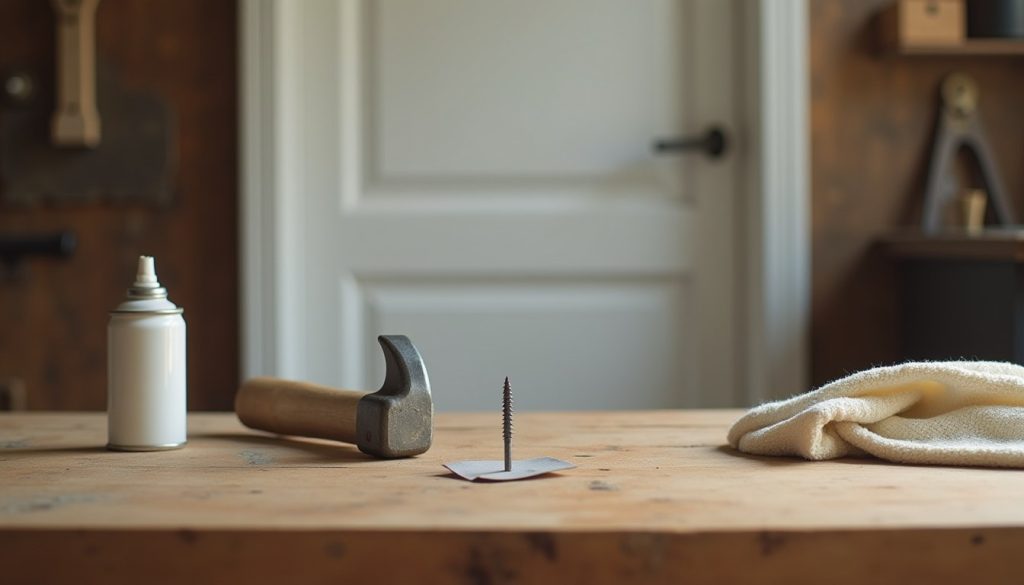
A squeaky door hinge usually gets fixed the same way every time: a quick squirt of whatever oil is in the drawer. It goes quiet for a week, then comes back louder, and now there’s a grey drip running down the frame. If the latch also sticks or the key fights you in the lock, it’s the same story. A proper fix takes about twenty minutes, a nail, a hammer and the right lubricant.
Pinpointing Which Hinge Is Making the Noise
Most interior doors hang on three hinges, and usually only one of them is the culprit. Swing the door slowly and listen with your ear close to each hinge in turn. If you can’t tell which one it is, grab the handle and gently lift the door upward while you move it. The noise will change or stop at the hinge carrying the most load, usually the top one.
Also check the gap around the closed door. If it’s much wider at the top on the latch side, the door is sagging too, which the last section deals with.
Knocking Out a Squeaky Door Hinge Pin Safely
Close the door first, or wedge a book or a folded doorstop under it so it can’t swing. Do one hinge at a time and leave the others in place. If you pull every pin at once, the door is free, and a solid-core door is heavy enough to fall on your foot or gouge the floor.
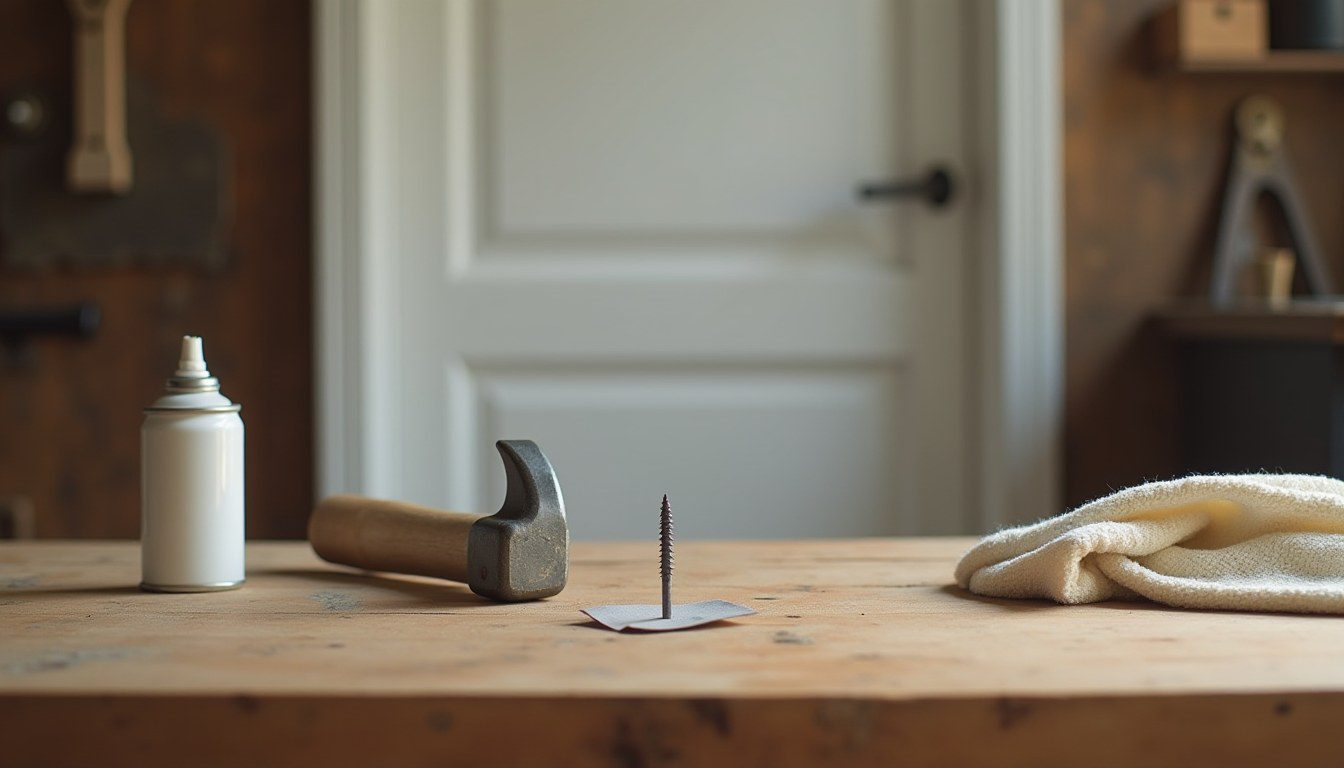
- Hold a nail (a 3-inch common nail works, or a thin screwdriver) point-up under the bottom of the hinge barrel, against the end of the pin.
- Tap the nail upward with a hammer until the pin’s head lifts clear of the barrel by about half an inch.
- Grip the head with pliers and pull the pin out. If it’s stuck, tap it a little more from below instead of twisting it.
A common mistake is hammering the decorative top cap downward. Always drive the pin up from underneath.
Cleaning the Pin and Choosing a Lubricant
The pin will often be coated in black grime: old oil mixed with dust. That paste is part of why the squeak keeps returning. Wipe it with a rag, then rub it with fine steel wool or a scouring pad until the metal is smooth. Run a pipe cleaner or twisted paper towel through the hinge knuckles too.
Then choose your lubricant:
- White lithium grease stays where you put it, doesn’t run, and lasts the longest on a hinge pin. A thin smear along the whole pin is enough.
- Silicone spray is cleaner and less likely to attract dust. It’s a good choice for white-painted hinges where a grease mark would show.
- General-purpose oil (the thin 3-in-1 type) works for a while, then drips and collects grit. WD-40 is better at freeing a seized pin than keeping it quiet.
- Bar soap or a candle stub will do in a pinch. Rub it along the pin and the squeak stops until you can buy proper grease. Expect to redo it within a few months.
Re-seating the Pin and Testing the Swing
Slide the pin back into the barrel from the top and tap it home with the hammer. Swing the door fully open and closed ten or so times to spread the grease through the knuckles. Wipe off whatever squeezes out of the joints straight away, or it collects dust and marks sleeves.
Check the floor too. Silicone overspray on laminate or tile is slippery, and both silicone and lithium grease stain carpet and clothes, so lay an old towel under the hinge before you start. Treated this way, a squeaky door hinge should stay quiet for years rather than weeks. The Family Handyman guide to fixing a squeaky door shows the same method with photos.
Sticky Lock Cylinders Need Graphite, Not Oil
If the key drags or you have to jiggle it, resist the oil can. Oil inside a pin-tumbler lock cylinder catches dust and over time turns into a sludge that jams the small pins. Use dry graphite powder, sold in a small squeeze tube with a nozzle at hardware stores.
- Put the nozzle into the keyway and give it one or two short puffs.
- Insert the key and turn it back and forth a dozen times to work the powder in.
- Wipe the key, since graphite leaves black smudges on fingers and pockets.
Graphite is messy, so hold a paper towel under the lock while you puff. If an exterior lock is still stiff after that, the problem may be the latch not lining up rather than the cylinder itself.
Fixing a Loose Strike Plate or Sagging Door With Longer Screws
A door that rubs at the top corner or won’t latch without a shove has usually dropped. Original hinge screws are often only 3/4 inch long and grip just the jamb. Swap one screw in the top hinge on the frame side for a 3-inch screw of the same gauge; it reaches the wall stud and pulls the door up and back. A wobbly strike plate gets the same treatment, and two longer screws usually stop the latch missing its hole.
Once the door hangs straight, check the seal; a sagging door often leaks air at the top, and these tips to weatherproof doors and cut drafts pick up from there. If you’re on a roll with small repairs, the same afternoon is a good time to fix a dripping tap washer or cartridge or clear a slow sink drain without harsh chemicals.
Next time a squeaky door hinge starts up, skip the spray can and reach for the nail. A clean pin with a thin coat of white lithium grease, plus a single 3-inch screw in the top hinge, should keep the door quiet and swinging straight for years.