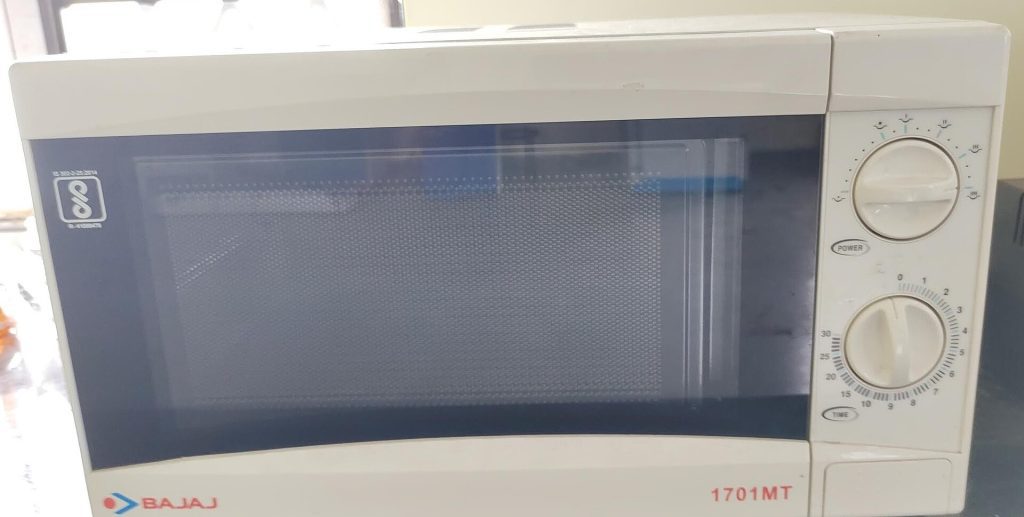
A microwave that smells of last week’s curry is not dirty in the way a frying pan is dirty. The safest way to clean a microwave is also the least forceful. Most of the mess is steam-borne grease that condensed on the walls, plus a dried ring of sauce on the turntable plate. The cleaning itself takes ten minutes. The risk is in the method: spray a cleaner into the vents or scrub the grey cardboard-looking panel on the right wall, and you turn a cosmetic job into a replacement.
Three things to protect before you clean a microwave
The waveguide cover is the flat rectangular panel, usually on the right-hand inner wall, sometimes hidden behind a slotted metal plate. It is often made of mica, it protects the magnetron from food spatter, and it must never get wet through. Wipe it with a barely damp cloth and stop there.
The control panel is the second casualty. Water tracking behind the membrane keypad shorts it, and a replacement panel usually costs more than the microwave is worth. Clean it with a cloth wrung out until it stops dripping, never a spray bottle aimed at the gap between buttons.
Third, unplug the appliance before you touch the interior. It is a thirty-second precaution that removes any doubt about the door interlock switches while your hands are inside.
The steam method for dried-on food
Put a microwave-safe bowl of water inside — about 250 ml — with a spoonful of white vinegar or a slice of lemon. Run it on high for three to four minutes, then leave the door closed for another five. The steam softens the grease film so that it wipes away with a cloth instead of a scraper, which is the only trick you really need to clean a microwave interior.
Do not open the door immediately after the timer ends. The bowl is superheated and can spit boiling water when disturbed; five minutes of standing time is both safer and more effective, because the condensation keeps working while the interior cools.
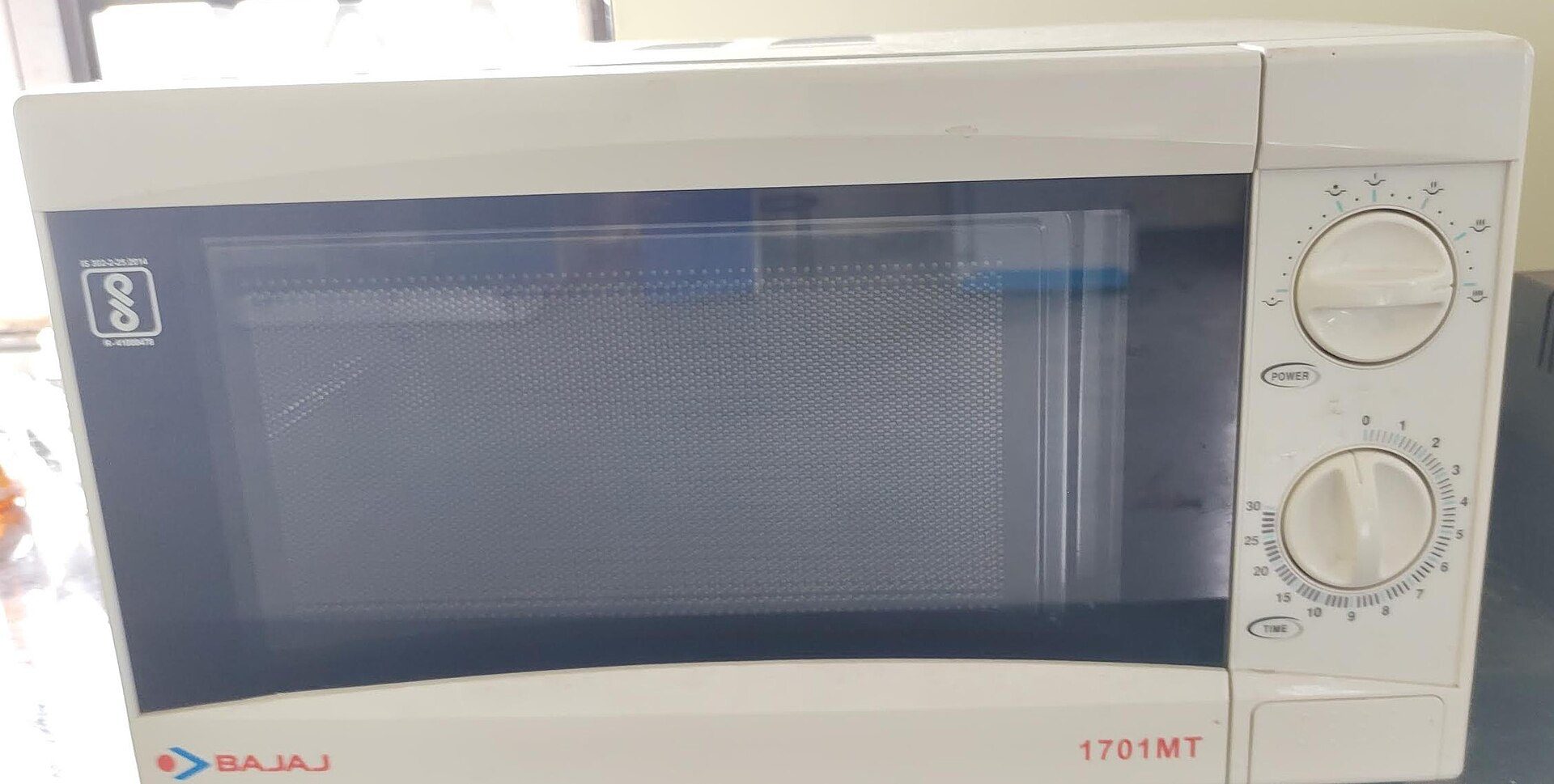
Clean the turntable and rollers properly
Lift out the glass plate and the roller ring underneath it and wash them in the sink with ordinary dish soap. This is the part people skip, and it is why a microwave still sounds gritty after the inside has been wiped. Food caught in the roller track makes the plate wobble, and a wobbling plate can crack.
Dry both parts completely before refitting. Water under the glass plate heats unevenly and can crack it on the next run. Check that the roller ring sits flat in its groove and that the coupling at the centre of the floor turns freely by hand.
Degrease the walls without scratching them
For a light film, a cloth dampened with warm water and a drop of dish soap is enough. For baked-on splatter, make a paste of bicarbonate of soda and water, dab it on, leave it for two minutes, and wipe with a non-scratch sponge. Avoid steel wool, abrasive cream cleaners, and anything labelled “heavy duty” — the interior coating is thin, and once it is scratched the steel underneath rusts.
Work top to bottom and finish with a clean damp cloth to lift soap residue. Residue attracts fresh grease, which is why a microwave cleaned in a hurry gets dirty again within a week.
If you are tempted to clean a microwave with a shop-bought spray, check the label first. Many contain ammonia or bleach, both of which attack the interior coating and leave an odour that reappears the next time you heat soup.
Get rid of the smell at the source
Wiping the walls does not fix a smell that lives in the filter or the vent. If your model has a charcoal filter behind a grille, check the manual for its location and replacement interval — typically every six to twelve months in a microwave used daily. A saturated filter holds odour and reheats it into the next meal.
For a mild smell, leave a bowl of bicarbonate of soda inside overnight with the door shut, or run another steam cycle with lemon juice. For a genuinely burnt smell, wipe down the door seal and the inner frame as well: the rubber gasket collects grease that no amount of interior scrubbing reaches.
When to stop cleaning and start replacing
Inspect the waveguide cover for burn marks, flaking, or holes. A damaged cover lets grease reach the magnetron and must be replaced before the microwave is used again — the part is inexpensive and often available for common models. A door that no longer latches firmly, sparks inside the cavity, or a turntable motor that has stopped are all signs to stop using it rather than deep-clean harder.
Keeping the appliance dry and clean also keeps it efficient, and a wiped-down cavity takes two minutes instead of twenty next time. Our notes on kitchen appliance habits that waste energy cover the rest of the counter, and the same descaling instinct applies to kettles: descaling an electric kettle with citric acid is the same ten-minute job in a different appliance.
A two-minute weekly habit
Wipe the interior with a damp cloth while the appliance is still warm from heating something, and leave the door ajar for ten minutes afterwards so moisture escapes. That single habit keeps the grease film from ever setting, which means the full method to clean a microwave above becomes an annual event instead of a monthly one.
The FDA’s microwave oven safety page is worth reading once if you want to understand why the door seals and the waveguide cover matter so much, rather than treating them as decorative parts.