You buy a fat bunch of dhonia pata for Tuesday’s dal, use a handful, and by Saturday the rest is a slimy, yellow clump stuck to the bottom of the vegetable drawer. Mint goes black, lettuce turns to mush, and the money goes in the bin with it. Learning to store fresh herbs and salad greens properly is less about gadgets and more about controlling three things: moisture, bruising and the gases other produce gives off.
What Actually Makes Coriander and Lettuce Rot
Leafy greens are mostly water in thin tissue, so they fail fast. Three culprits:
- Too much moisture. Water sitting on leaves breeds bacteria and turns them slimy. This is the main reason a wet bunch of coriander collapses inside a closed plastic bag.
- Too little moisture. In dry fridge air, uncovered leaves wilt within a day or two.
- Ethylene and bruising. Bananas, tomatoes, apples and mangoes release ethylene, a ripening gas that speeds up yellowing in leafy greens. Crushed or bruised leaves also break down faster and drag the healthy ones with them.
The goal is leaves that are dry on the surface, kept in humid air, away from the fruit bowl and not crushed.
How to Store Fresh Herbs: Jar for Soft, Paper for Hard
The right method depends on whether the stems are soft or woody.
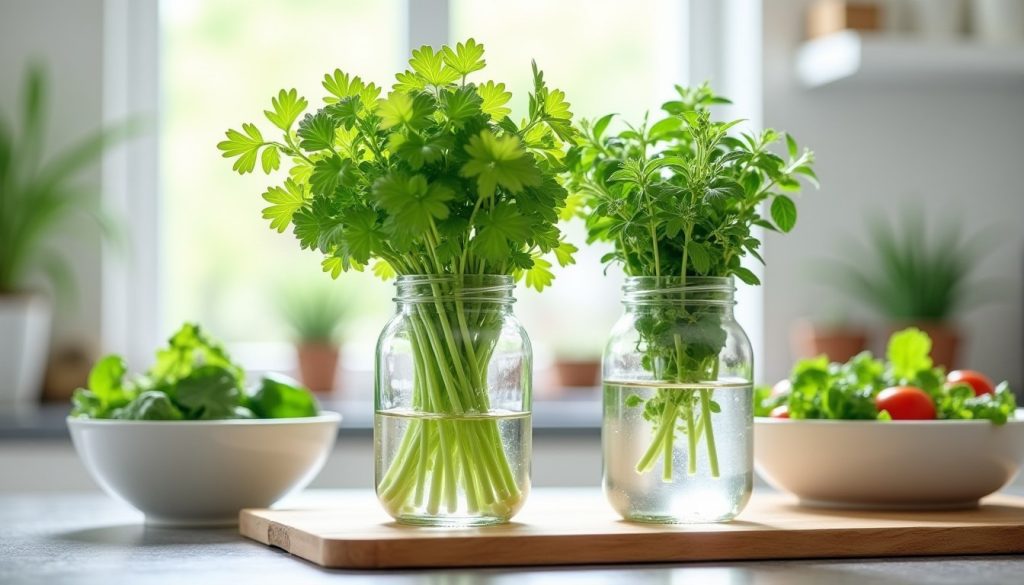
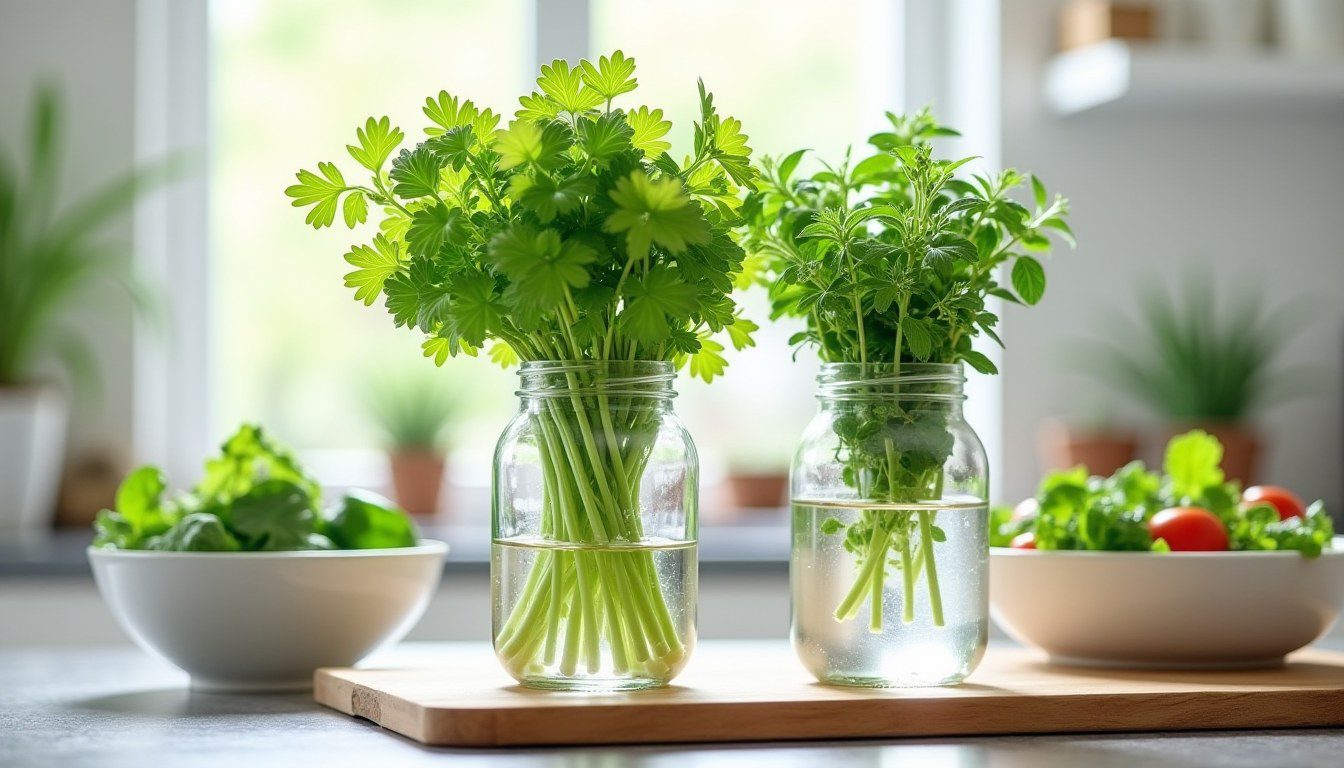
Soft herbs such as coriander, pudina (mint), parsley and dill do best treated like cut flowers:
- Pick out any yellow or slimy stems first. One rotten sprig spoils the rest.
- Trim a few millimetres off the stem ends with a knife or scissors.
- Stand the bunch in a jar or glass with about 2-3 cm of water, roots on if they came with them.
- Cover the leaves loosely with a plastic bag (a clean bread bag works) and put the jar in the fridge door or on a shelf.
- Change the water every two days, or as soon as it looks cloudy.
Hard herbs like rosemary, thyme and curry leaves don’t want to sit in water. Wrap them loosely in a slightly damp paper towel (wrung out, not dripping), then put them in a container or zip bag. The towel keeps the air humid without soaking the leaves.
A common mistake is overfilling the jar. Strip any lower leaves that would sit underwater, because they rot.
When to Wash Greens, and How to Dry Them
The simplest rule: wash herbs and greens just before you use them. Storing them damp is the fastest route to slime.
If you’d rather prep a head of lettuce or a bundle of lal shak on the weekend, drying is the step that matters. A salad spinner earns its cupboard space here: spin, tip out the water, spin again. Then line a box with a dry paper towel, lay the leaves in loosely, put another towel on top and close the lid. Swap the towels if they become soaked. Don’t cram the box, because squashed leaves bruise.
Keep the box in the crisper drawer, and keep that drawer away from fruit for the ethylene reason above. It also helps to check that your fridge is cold enough. The FoodSafety.gov cold storage chart recommends keeping the fridge at 40 degrees F (4 degrees C) or below, and our guide to refrigerator temperature settings explains how to check and adjust yours.
Basil Hates the Fridge
Basil is the big exception. It is sensitive to cold, and in a fridge the leaves often turn black and limp within a day or two. Keep it on the counter in a jar of water, out of direct sun. In a hot Dhaka kitchen in summer, plan to use it within a few days regardless.
Ripening tomatoes don’t belong next to your herbs either; they add ethylene to the drawer.
Freezing Herbs in Oil and Reviving Wilted Leaves
Another way to store fresh herbs you won’t finish is to freeze them before they turn, not after. The texture won’t suit garnish, but it’s fine for cooking.
- Wash and dry the herbs thoroughly.
- Chop them finely and pack an ice cube tray about two-thirds full.
- Pour over a neutral oil (or ghee, melted) to cover the herbs.
- Freeze, then pop the cubes into a labelled bag.
Drop a cube straight into a hot pan for curry, dal or bhuna. Mint and coriander cubes are especially handy for chutneys and marinades.
For greens that are wilted but not slimy, soak them in ice water for 10-15 minutes and they firm back up. This works for droopy lettuce, coriander and mint. Anything that smells sour, feels slimy or shows mould goes in the bin, no exceptions.
The Taka Behind One Wasted Bunch a Week
A single bunch of herbs feels too cheap to worry about, which is exactly why it gets wasted. But do the maths: if a bunch costs you around Tk 30 and you throw one away every week, that comes to roughly Tk 1,500 a year. Add the odd head of lettuce and it climbs quickly. Prices vary by bazar and season, but the pattern holds.
Once you store fresh herbs properly, the other half is buying. Planning a few meals that share the same herbs means one bunch of dhonia pata gets used in Monday’s dal, Wednesday’s chicken and Friday’s salad. Our meal planning steps that cut food waste walk through exactly that, and these habits to reduce food waste at home cover the rest of the kitchen.
If you change just one thing this week, make it the jar. Trim the stems on your next bunch of coriander, stand it in 2-3 cm of water with a loose bag over the top, and change the water every couple of days. Coriander that’s still green on day eight is the best argument for the habit.